
Holding regular planning sessions is key to ensuring that your team stays focused on the right strategic priorities. Without a formal Planning Calendar, the team risks wasting valuable execution time, coming to sessions ill-prepared, and missing opportunities for reflection and analysis.
Annual Planning
The best practice is for teams to hold Annual Planning once per fiscal year, a few weeks before the new year begins. This is when your team will set a small handful of high-level Priorities for the company for the coming year. You may also choose to include in-depth strategic planning in this session—time reserved for working on Winning Moves and foundational strategy items.
Many teams choose to hold their Q1 Planning at the same time as Annual Planning; others split these events up. Regardless, Annual Priorities should always be determined before Q1 Priorities are set.
Plan to spend at least two full days in Annual Planning, especially if you will build your Q1 Priorities at this session. If you choose to devote time to strategic planning, consider budgeting for an additional half or full day.
Quarter Planning
Quarter Planning is held once per quarter, at least one week before the new quarter begins. Although long-term strategy usually receives a brief review at these sessions, the predominant focus is on building a 13-week execution plan.
Executive Teams should spend at least one full day in Quarter Planning. Departmental teams may spend a half day, depending on the size of the team and the complexity of the discussion.
Key Events
Each planning cycle includes a base set of key events:
- Planning Preparation (potentially conducted with your Rhythm Consultant or Success Coach)
- Executive Team Planning
- Departmental Team Planning
You may choose to adjust or add events depending on your team’s needs and how deeply into your organization you will cascade the plan.
For more information on planning events, how to conduct them, and what your team might need, check out Executing a Planning Cycle.
Example Planning Calendar
Here’s an example of a simple Planning Calendar for a company that utilizes the calendar year. If your fiscal year is different, adjust accordingly.
Annual & Q1 Planning:
- October / November: Prep for Annual & Q1 Planning
- November / December: Hold the Annual & Q1 Planning Session(s)
Q2 Planning:
- February / March: Prep for Q2 Planning
- March: Hold the Q2 Planning Session
Q3 Planning:
- May / June: Prep for Q3 Planning
- June: Hold the Q3 Planning Session
Q4 Planning:
- August / September: Prep for Q4 Planning
- September: Hold the Q4 Planning Session
Your calendar may include a more complex set of events depending on how many teams are included in the planning process and what their unique needs are.
Selecting and communicating planning dates for the entire year at the beginning of the year is the best practice. Proactive scheduling provides several advantages:
- Higher attendance: Team members can reserve these dates on their calendar to ensure their participation.
- Adequate facilitator lead time: Your Rhythm Consultant can commit to leading your team’s sessions well in advance.
- Early logistics finalization: You can lock in practical details, like venues, accommodation, and travel, before availability decreases and prices spike.
- Consistency: Your team will develop a predictable planning rhythm and better understand the importance of these sessions.
Set recurring events in your own calendar to prompt you to prepare for the session, send communication to the team, and connect with your Rhythm partners.
Sharing the Calendar With the Team
A hidden or hard-to-access calendar helps no one. Once you have selected dates, add the Planning Meetings to Rhythm. Use the Calendar View, select all Teams, and filter by Meeting type to visualize all sessions simultaneously:
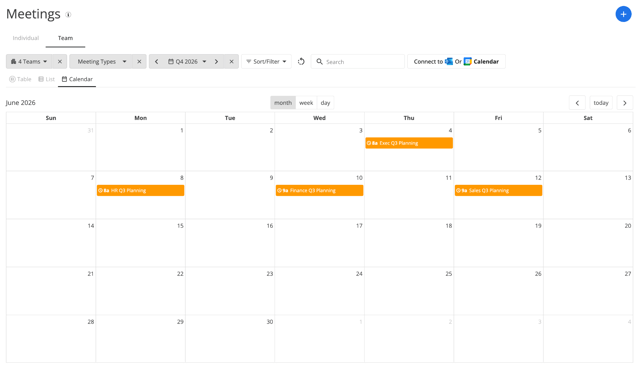
Link your planning calendar in your employee intranet, and activate the Rhythm Calendar Integration to show the events in your Outlook or Google Calendar. Let the team know what the calendar is, where they can find it, and if there are any significant changes to it throughout the year.
Prior to each planning cycle, send an email to all participants. Highlight the what, why, and when of planning. Make responsibilities clear, and set a definite deadline for any prep work.
Next Steps
-
Identify which teams should be included in planning.
-
Determine the key events you will need during each planning cycle to ensure the session runs smoothly and the team produces a clear, finalized, execution-ready plan.
-
Commit to specific dates (or, at minimum, time frames) for planning events to take place. Do this for the entire year ahead. Let your Rhythm Success Coach know when you have selected dates.
-
Publish the calendar by creating Meetings in Rhythm, and ensure easy visibility for the team via the Calendar Integration.
The teams with the strongest planning habits have a committed Champion who drives this process. If overseeing the Planning Calendar is not an achievable goal for you, consider delegating this to a trusted team member. This person, like you, should understand the importance of strategic planning.
Ready to go deeper? Explore these resources:
- Strategic Planning Tips: 17 Expert Tips for Effective Planning
- The Power of a Great Annual Planning Facilitator
- Annual Planning: Create a Strategic Annual Plan
Questions along the way? Reach out to your Success Coach or email help@rhythmsystems.com. We are ready to help you build and maintain a planning calendar that keeps your team aligned and focused.