

backAll Articles

Published December 19, 2022 at 09:00 AM

Job Scorecard Examples and Template (Updated for 2026)

4 min read
Job Scorecard Examples and Template (Updated for 2026)
2:46
4 min read
Job Scorecard Examples and Template (Updated for 2026)
2:46

Key Takeaways

  • A Job Scorecard defines a role's purpose, the key results it's accountable for with metrics and KPIs, its key responsibilities, the skills and competencies required, and the core-value behaviors expected, so each person knows exactly what's expected of them.
  • Create Job Scorecards for every person in the company, starting with the executive team.
  • Before rolling out, decide how Job Scorecards will affect your internal processes, like performance reviews, development plans, or compensation.
  • Roll out department by department: start with an objective statement for the department, identify each role, then managers work with each team member on purpose, responsibilities, desired results, and required skills.
  • The person filling the role and their manager must be 100 percent aligned, and every essential responsibility and result in the department should show up on someone's Job Scorecard.

According to Gallup, only about half of workers in companies worldwide “strongly agree that they know what is expected of them at work.” How can they achieve performance goals if they don’t know what’s expected? If you are a manager, you need to help your team set and achieve goals and help each person on the team understand exactly what’s expected from him or her. And, you should know exactly what’s expected of you, as well. This is why we recommend doing Job Scorecards (or Employee Scorecards) for each person in the company, starting with the executive team members.

How to Implement Job Scorecards

  1. Decide how Job Scorecards may impact your internal processes. For example, will they impact performance reviews, development plans, or compensation?

  2. Work on Job Scorecards for the Executive Team first.

  3. Roll Job Scorecards to each department. Start with an objective statement for the department, then identify each role in the department.

  4. Managers work with each team member on their purpose within the department, the key responsibilities and desired results of their role, and the skills and competencies needed to fulfill those responsibilities.

The steps sound pretty straightforward, but creating Job Scorecards for everyone can be quite an undertaking. It is essential that the person filling the role and their manager are 100% aligned and that all the essential responsibilities and results for the department show up on someone’s Job Scorecard. Often, this process takes some back and forth and involves individual work, one-on-one work with a manager, and time to share all the Scorecards as a team.

For each Job Scorecard, here are the questions each person will need to answer:

  • What is your current role?
  • Who do you report to in your role?
  • Why does this employee role exist? What is the purpose?
  • What key result(s) is the person filling this role accountable for, and how will success be measured - what metrics and KPIs? You can browse our comprehensive list of metrics for your KPI scorecard to get you started.
  • What are the key responsibilities of this employee? What does this person do?
  • What skills and competencies are required to be successful?
  • What behaviors should be demonstrated by each person in the company? (These are the company's Core Values.)
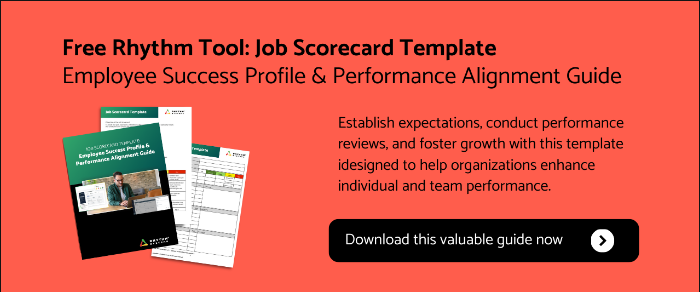
Hopefully, this Job Scorecard Template (employee scorecard) will help you start the process of creating Job Scorecards for yourself and your team. With this role clarified, your team will be engaged and empowered to achieve performance goals and grow their most valuable skills. Job scorecards are recommended to be used in the hiring process by the experts at Topgrading.

 

Frequently Asked Questions

What is a job scorecard?

A Job Scorecard (also called an employee scorecard) is a document that clarifies exactly what's expected from a role: why the role exists, the key results it's accountable for and how success is measured, the key responsibilities, the skills and competencies required, and the behaviors expected of everyone in the company, which are the core values. With the role clarified, team members are engaged and empowered to achieve performance goals.

What questions should a job scorecard answer?

Seven questions: What is your current role? Who do you report to? Why does this role exist, what is its purpose? What key results is this person accountable for, and what metrics and KPIs measure success? What are the key responsibilities? What skills and competencies are required? And what behaviors, meaning the company's core values, should be demonstrated?

Who should create job scorecards first?

Start with the executive team. Once executive scorecards are done, roll them out to each department, beginning with an objective statement for the department and then identifying each role within it.

How do you implement job scorecards across a company?

Four steps: decide how scorecards will impact internal processes like performance reviews, development plans, or compensation; complete scorecards for the executive team first; roll them out department by department; and have managers work with each team member on the purpose, responsibilities, desired results, and skills for their role. Expect back and forth: individual work, one-on-one sessions with the manager, and time to share all the scorecards as a team.

How do job scorecards improve accountability?

People can't achieve performance goals if they don't know what's expected of them. A scorecard makes expectations explicit and requires the person and their manager to be 100 percent aligned on them. It also ensures every essential responsibility and result in a department is owned by someone, so nothing important falls through the cracks.

Picture of Jessica Wishart

Jessica Wishart
Jessica is Senior Product Manager at Rhythm Systems. She has experience in Client Services and Rhythm software technical support. Her background is in Organizational Execution.
LinkedIn Connect with me on LinkedIn.