

 All Articles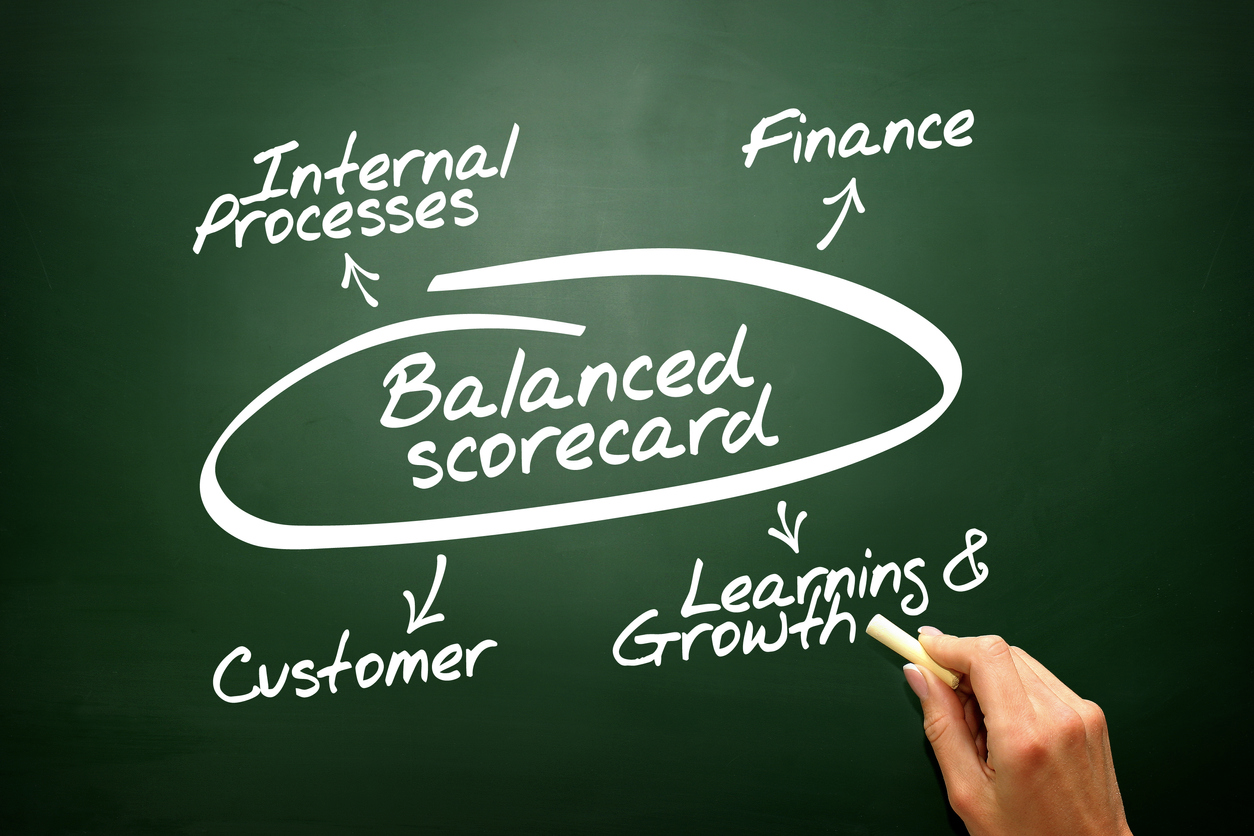
The Balanced Scorecard, initially developed by Dr. Robert Kaplan of Harvard University and Dr. David Norton, can keep your company balanced. They used this scorecard as a framework for measuring organizational performance through a balanced set of performance measures (as opposed to Wall Street’s need for short-term financial performance). Kaplan and Norton’s approach added non-financial measures to the standard financial measure of the time to more accurately focus on a company’s long-term success.
Here’s how they described the innovation of the Balanced Scorecard in chapter one of their book, page 7:
“The balanced scorecard retains traditional financial measures. But financial measures tell the story of past events, an adequate story for industrial age companies for which investments in long-term capabilities and customer relationships were not critical for success. These financial measures are inadequate, however, for guiding and evaluating the journey that information age companies must make to create future value through investment in customers, suppliers, employees, processes, technology, and innovation.”
Today, the Balanced Scorecard is used by mid-market companies to:
- Communicate their strategic plan
- Track and measure progress of what’s most important
- Align team members' day-to-day decisions/effort with company strategy
- Set actionable steps toward a long-term vision
- Earn a return on payroll (ROP) through focus on priorities and strategy
A key benefit of using a balanced framework includes having a solid method to connect the dots between your Quarter/Annual plan, management, and plan execution. Rhythm Software uses links to visually show this relationship, and you should make sure there is a traceable connection between projects, initiatives, employee effort. Put results on a scoreboard or dashboard to track KPIs and the strategic objectives you’re trying to accomplish weekly—all within the framework of organizational core purpose, core values, and strategy.
What categories should we use for a scorecard?
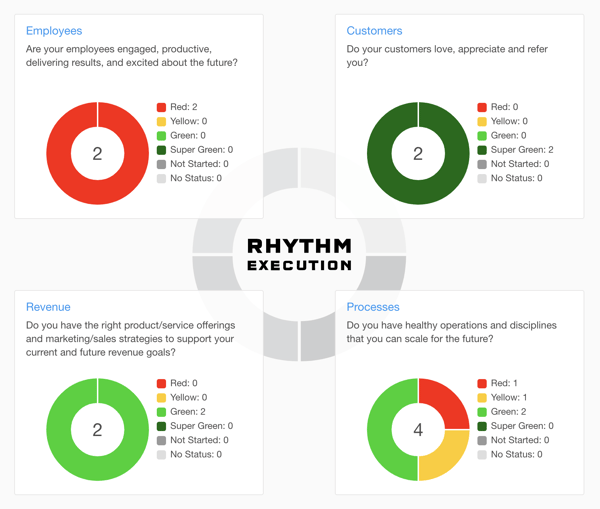
My experience is that everything needed to measure business success will nest nicely in four categories on a Key Performance Indicator (KPI) Scorecard:
- Employee Category (which could include health, learning, growth, human capital, culture)
- Customer Category (which could include stakeholders, customer value, customer satisfaction, customer retention)
- Revenue Category (which could include cash, sales, financial performance, effective resource use, technology, stewardship)
- Process Category (some teams prefer to put technology here, which could include efficiency, quality, safety)
How does the Balanced Scorecard keep my business balanced?
There are 5 specific ways:
1. Expected Outcomes for Your Strategic Planning
Your scorecard will provide a powerful framework for communicating and connecting company strategy to plan execution. Building your KPIs while planning strategically helps leadership identify gaps in planning. It helps your team map employee effort directly to your plan, and it helps the team stay laser-focused on delivering your strategic objectives. My experience is that well-implemented Balanced Scorecards help align organizational processes like budgeting, cash flow management, risk management, analytics, etc. to company priorities.
2. Improved Plan Communication
Expect to gain better organizational alignment by measuring and discussing KPIs weekly in what we call a Weekly Adjustment Meeting (WAM). This helps ensure that all departments and support functions are working towards the same goals.
3. Improved Plan Execution
We’ve all heard that a picture is worth a thousand words. In this case, your whiteboard, spreadsheet, or online tool like Rhythm Software creates the same picture for all to see. This makes it easier to execute strategy by consistently measuring, discussing, and experiencing accountability on KPIs directly tied to your plan with Employee Engagement Metrics
4. Better Management Information through Dashboards
Design your key performance indicators for each plan priority to ensure that you are measuring what actually matters. My anecdotal experience is that this Balanced Scorecard is a successful approach. See research here that confirms my experience.
5. Improved Performance Management
A Balanced Scorecard is effectively used in design of performance reports and dashboards. We built this functionality into Rhythm Software to help you monitor individual efforts towards execution of your plan. You can do the same by making sure that each team member has a few KPIs tied directly to their job.
Use your KPI Balanced Scorecard as a framework for measuring organizational performance through a balanced set of performance measures chosen from four categories: Employees, Customers, Revenue, and Process. You, too, will experience success with this approach—and that's why the Balanced Scorecard can keep you balanced!


Barry Pruitt
Barry is a Rhythm Consultant. He has years of experience helping clients get in a strong Think Plan Do Rhythm to grow their business with purpose. He is also a professional speaker and expert meeting facilitator.
 Connect with me on LinkedIn.