

 All Articles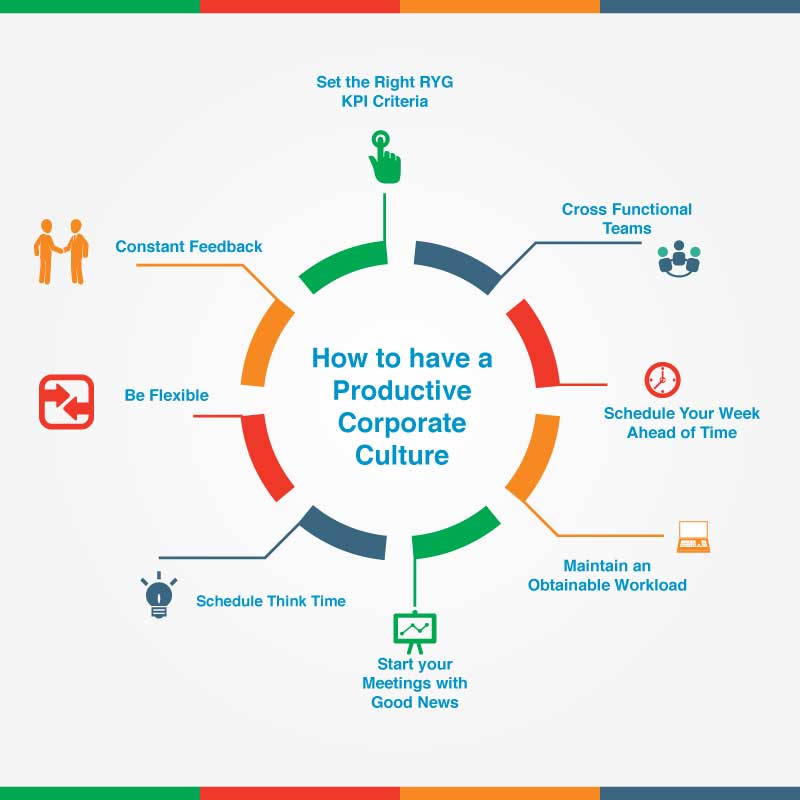
Company culture is essential. If disengaged workers were engaged, they would boost U.S. productivity by $79 billion a year!
A boost in productivity could be a massive benefit to your company. Good culture and productivity go hand in hand. If your firm is strong in culture, productivity will improve.
So, how do you ensure the correct ratio of fun and productivity?
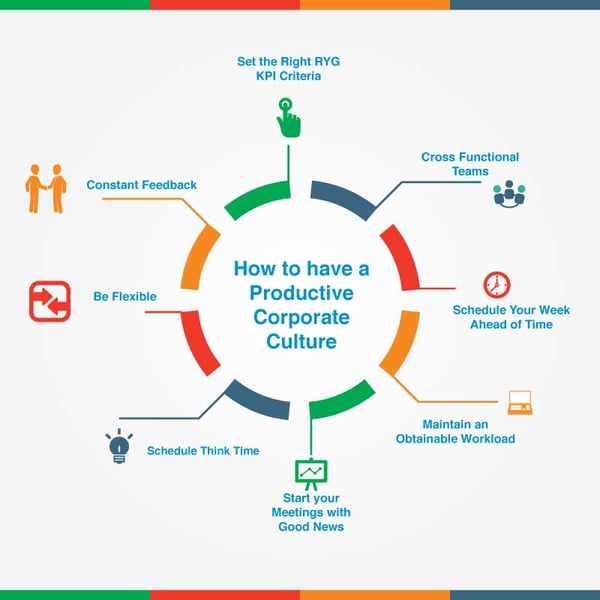
1. Start your Meetings with Good News
At the start of your weekly meeting, share a round of good news. This will start your meeting off on the right foot. After a round of good news, you can dig into the meat of the meeting - what problems need to be addressed and solved.
2. Constant Feedback
At Rhythm Systems, we believe in constant feedback rather than the dreaded annual performance reviews. Constant feedback will keep employees productive because they know they are working on the right priorities.
4. Schedule Think Time
When people think about productivity, they rarely think about spending an hour flexing the brain. However, taking time to process through a set of problems and actively get ahead allows you to look at the big and small picture.
5. Be Flexible
A perfect example of this is my colleague and me. I am a typical morning person; I get a lot done before noon, but after lunchtime, forget it! On the other hand, she is most active in the afternoon and rarely productive in the morning. Allow your employees to structure their days to maximize their productivity.
6. Set the Right Red-Yellow-Green Criteria
Your A players need the proper success criteria to hit their goals. When working on your quarterly and annual plans, you need realistic goals and milestones. The correct success criteria will help focus your team's energy and projects throughout the year.
7. Cross-Functional Teams
So often, we get stuck in the paradigm of "this is how things always have been done," so they stay the same. We have teams at Rhythm Systems called CANI (Continuous and Neverending Improvement); CANI teams comprise employees from different departments. Different perspectives change how problems and solutions appear and drive measurable employee engagement.
8. Schedule Your Week Ahead of Time
Too often, we get halfway through the week before realizing that we didn't get anything done that we wanted to get done. Our team suggests sitting down once a week and scheduling your week ahead. I recently wrote a blog about how to plan a week.
9. Do Less Not More
It is better to do less effectively than to try (and fail) to do everything all at once. Make sure your team has enough capacity to get all their priorities done. Use an employee health index to track employee health, and ask if their status is red or yellow to see how you can help them. A happy employee is a productive employee.
Want to learn more about improving Employee Engagement? Check out these additional resources:
10 Ways to Improve Employee Engagement in Your Manufacturing Company
3 Employee Engagement Stats that Will Make You Take Action
5 Employee Engagement Blunders to Avoid
Improving Employee Engagement (Video)


Rhythm Systems
 Connect with me on LinkedIn.