

 All Articles
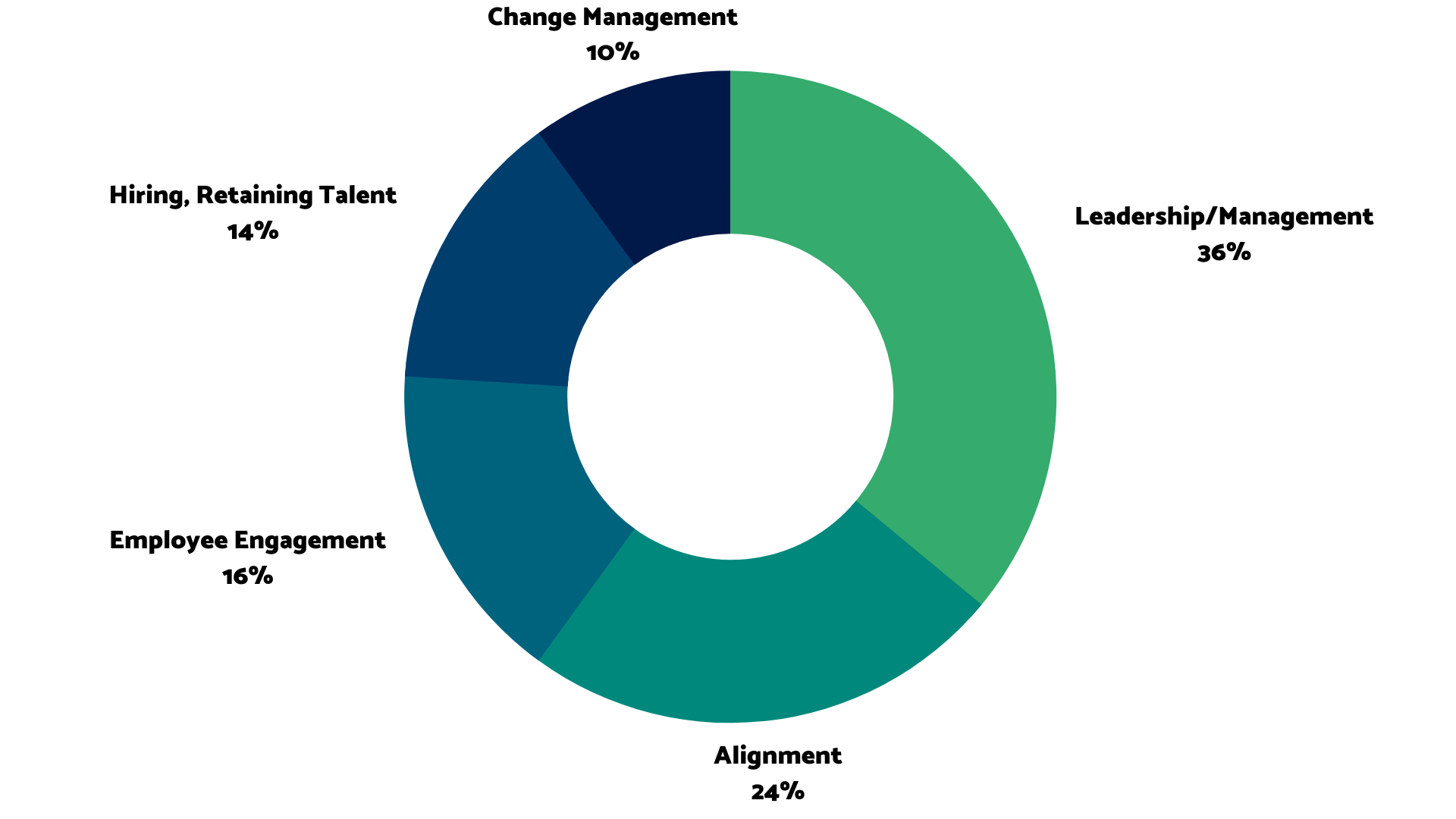
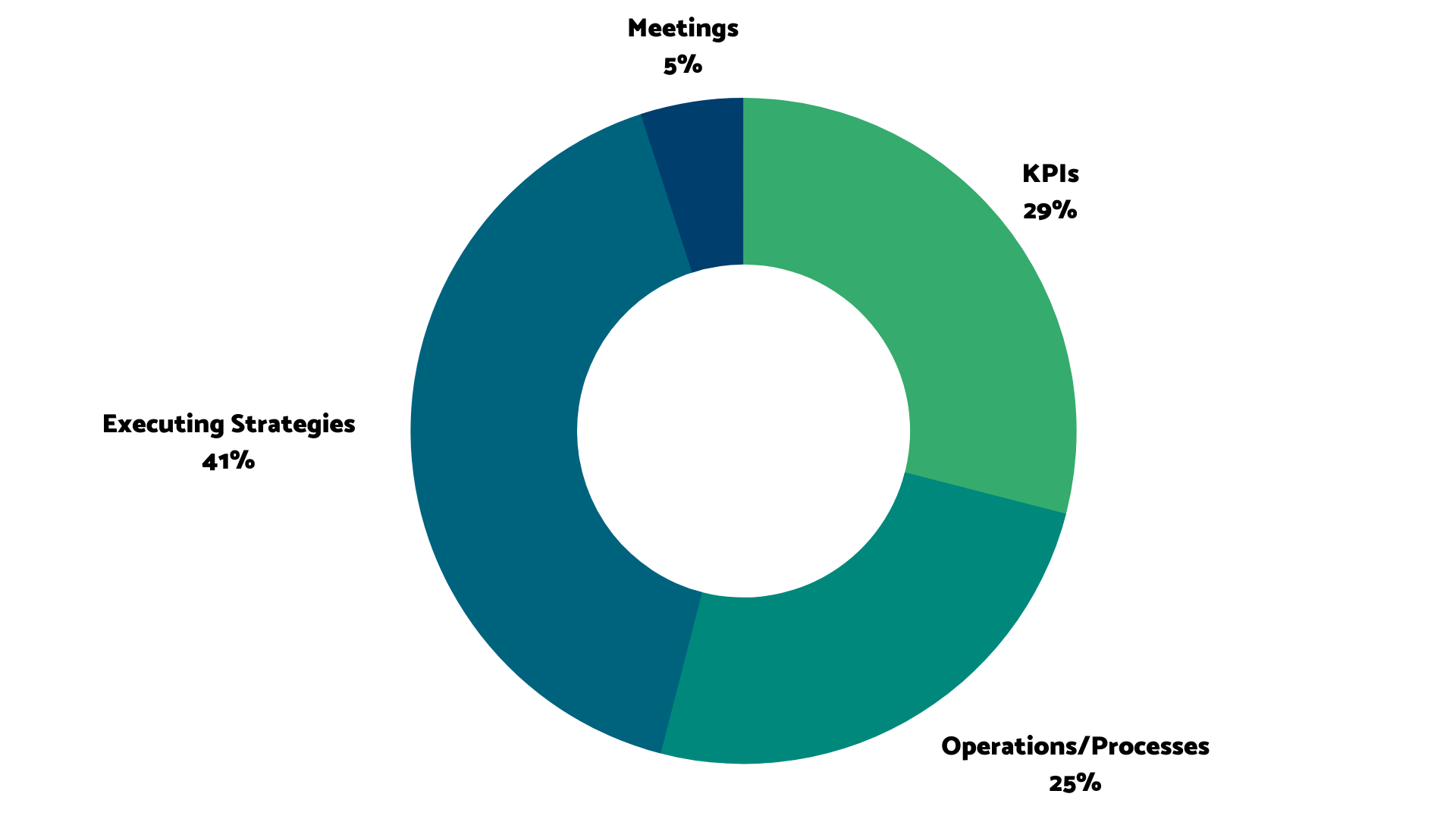
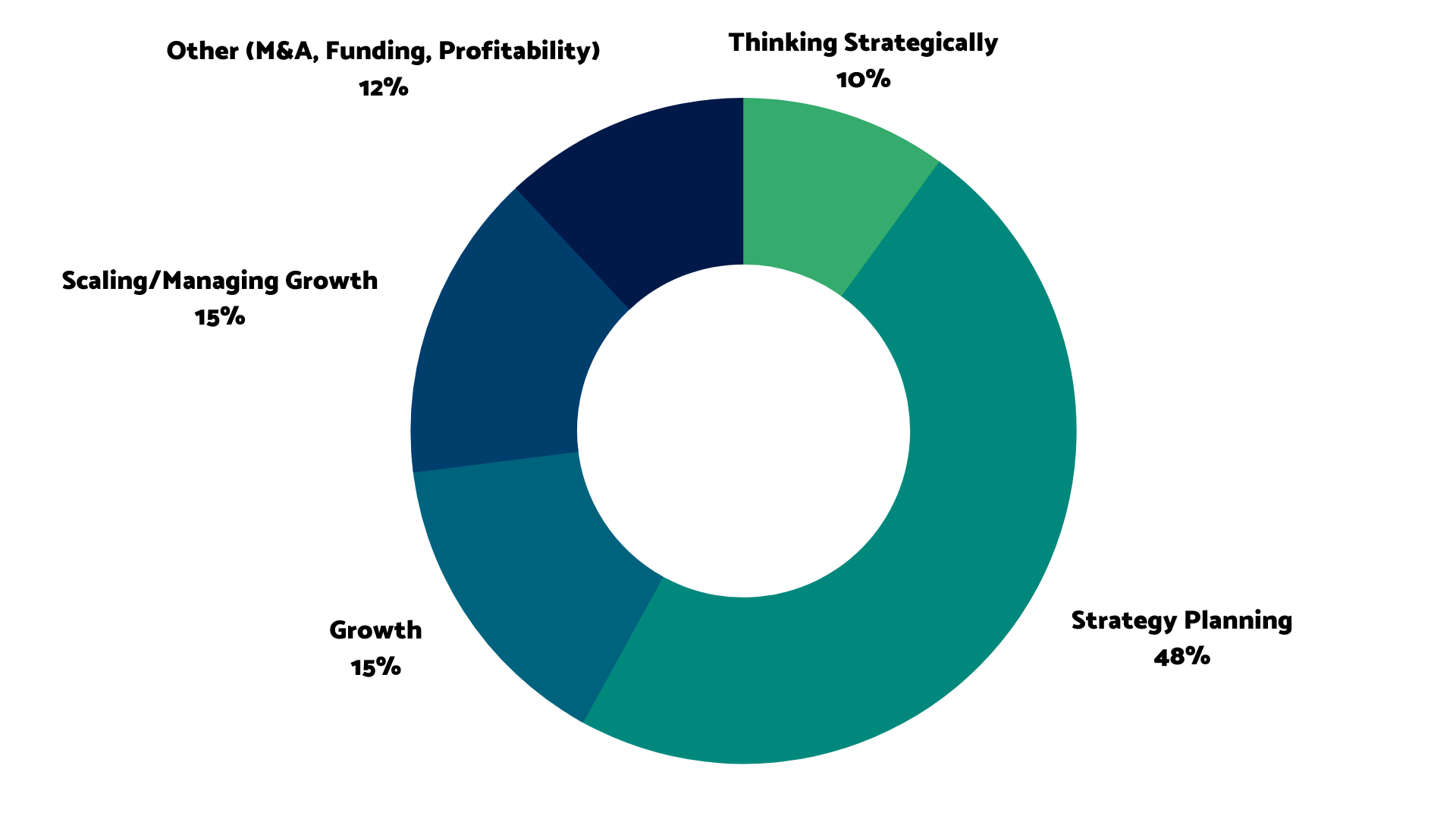
Over the last few years, we've been collecting data from our Rhythm community - including YPO members, entrepreneurs of the year, and fast-growth companies - on their biggest business challenges. We are always interested in understanding what keeps our CEOs up at night so we can better help them navigate challenges and avoid failure. As I analyzed hundreds of meaningful responses, the answers fell into a few major categories: People (leadership, performance, employee engagement, high-performance culture, hiring & retention); Execution (implementing strategies, completing projects, measuring KPIs, establishing processes and systems); and Strategy (growth, strategic planning, M&A, funding, scaling).
Biggest Business Challenges in 2026
.gif?width=1440&name=Untitled%20design%20(4).gif)
Our team looked at the data a few ways. I did a card sort to figure out the themes and categories, and we analyzed the company's revenue bands, as well, to determine where larger companies may be struggling in different areas than smaller ones. Here's how the biggest business challenge categories above break out into the most popular themes:
Biggest Business Challenge: People
Biggest Business Challenge: Execution
Biggest Business Problem: Strategy
When we analyzed the responses broken down by revenue bands, we found some patterns that kept coming up in the data:
Revenue Range <$1 million:
-
Systems and Processes
-
Measuring a balanced scorecard of KPIs
-
Defining Strategy and Planning for the Future
-
Cash flow, Profitability
-
Organizational change, change management
-
Talent, engaging employees, communication
Revenue Range $1-5 million:
-
Growth
-
Managing growth
-
Pipeline growth
-
Scaling Up Your Business
-
Efficiency
-
Building a team, working together, team management
-
Culture of Execution and Alignment
-
Measuring Performance and Productivity
Revenue Range $5-10 million:
-
Getting leads, pipeline, getting clients, customer acquisition
-
OKR goal tracking, KPI setup, and measurement
-
Lack of strategic plan
-
Strategy execution, execution of strategic goals
-
Performance management
-
Growth
Revenue Range $10-25
-
Managing strategic initiatives, executing strategic plans, delivering annual plans, executing our Strategy
-
Visibility
-
Planning
-
Tracking initiatives
Revenue Range $25-50 million:
-
Managing operational and financial guarantees, driving growth, consistent delivery
-
Missing numbers and deadlines
-
Creating a strategic, functional structure
-
Cascading Strategy down multiple areas, tying individual activities to overarching goals, aligning projects to strategic planning and goals
-
Accountability
Revenue Range $50-100 million:
-
Growth
-
Team dynamics, alignment
-
Lack of accountability, departmental silos, disciplined employees
- Communication across multiple departments related to specific initiatives
Revenue Range $100-250 million:
-
Poor execution. It isn't the lack of ideas but finding where to eat from the buffet of opportunity.
-
Keeping 3–5-year strategic plans live and active, tracking strategic plans throughout the year ( 3 year plan template PDF)
-
Motivating staff, engagement
-
Cross-functional team alignment
-
Improving weekly meetings
-
Spreadsheets not effective
-
Tracking KPIs and goals
-
Coordination, continuous improvement
-
Simple systems, clarity
Revenue Range $250-500 Million:
-
Firefighting. Concentrating on the urgent instead of the important.
-
Performance management
-
Execution, putting a plan in place
-
Role clarity and job scorecards
Revenue Range Over $500 Million
-
Translate Strategy to operational, flow corporate Strategy to the subsidiary manager and department heads, tracking the same,
-
Align company goals and teams
-
Accountability, lack of consequence management
-
Facilitation, building strategic plan and exit
-
Operational organization, getting organized
As you read this list, many of these challenges resonate with you as a business leader. Companies of every size wonder how to grow their business to the next level with the right Strategy, processes, people, and tools to manage that growth effectively. It can be comforting to know that you're not alone and even more enjoyable to know that our experts have helped leaders successfully navigate all these challenges and more!
Our consultants have turned their insights from working with companies of every size and industry over the last 17 years into a proven playbook to help companies grow from $5 to $10 Million and $10 Million to $100 Million, and even $1 billion you can join our list of unicorns. Not only do they have great tips and tricks to share, but we also have the most robust and easy-to-use strategy execution software platform on the market to help you turn your insights into action and ensure your growth strategies come to life in your company.
Suppose you are ready to stop staying nights worrying about the hundreds of challenges your business could face at any moment. In that case, our experts are prepared to help you tackle your business challenges, whatever they may be.

Jessica Wishart
Jessica is Senior Product Manager at Rhythm Systems. She has experience in Client Services and Rhythm software technical support. Her background is in Organizational Execution.
 Connect with me on LinkedIn.