 All Articles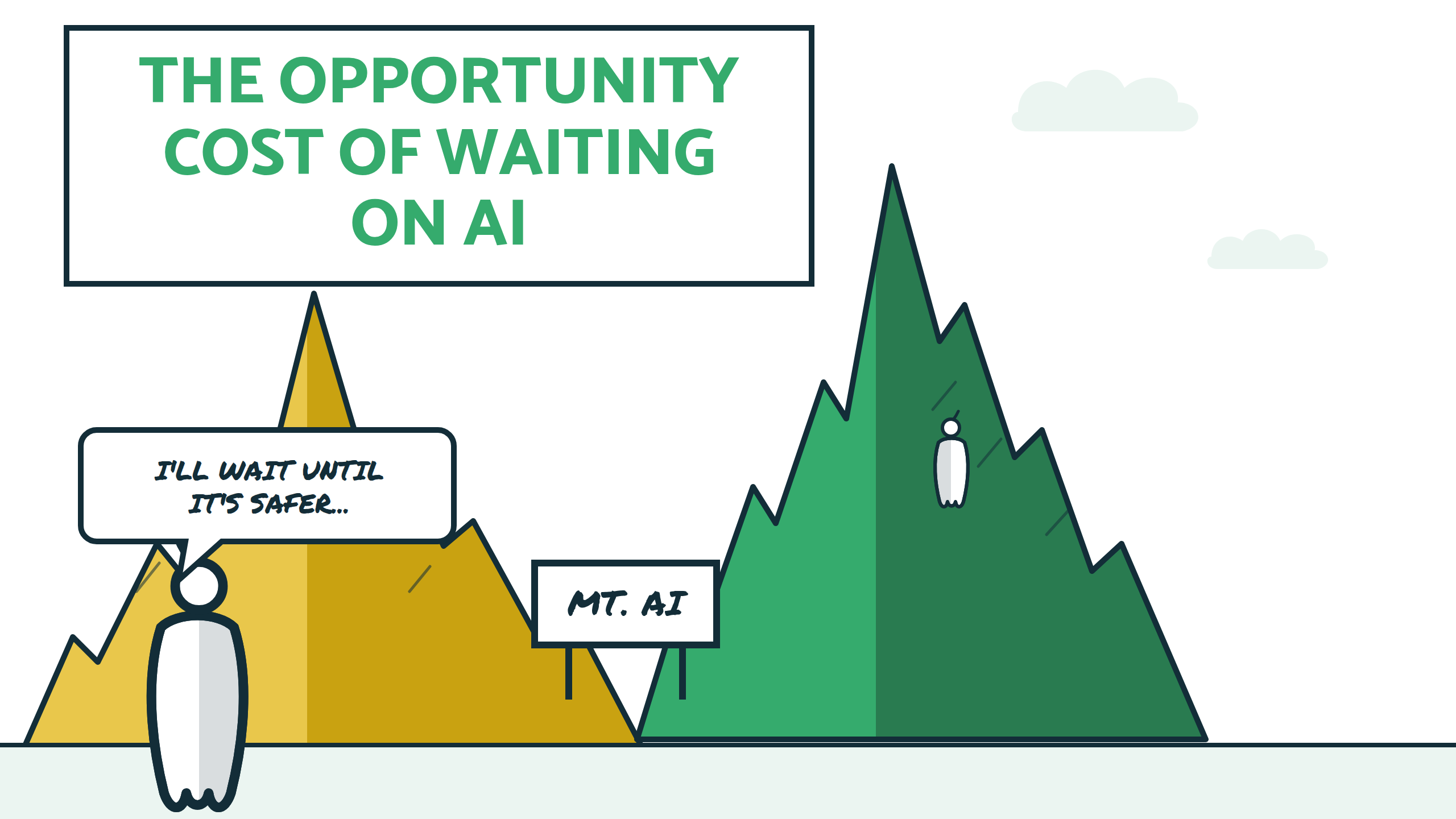
Key Takeaways
- Waiting is a decision, not the absence of one. When you delay adopting AI “until things settle down," you haven't avoided risk, you've defaulted into the riskiest choice of all: standing still.
- The real cost of waiting is time, not money. Money can be earned back. A quarter spent standing still is gone forever, and time is the one resource you can never recover.
- Waiting means you learn nothing. Competitors who started experimenting with AI months ago aren't just further along technically — they're further along in understanding what actually works for their business.
- You don't need the perfect decision, you need a decision that moves you forward. Movement creates learning, learning creates better decisions, and that flywheel only spins once you start it.
- Start where AI already touches your business: operations and execution, tracking commitments, pressure-testing strategy, and getting early warnings before priorities go red.
Waiting On AI is a Decision, it's Just Not an Intentional One
Here's the trap, and I've fallen into it myself: waiting feels prudent. Deciding commits you to something, and commitment feels risky. So you tell yourself you're being careful. You're “watching the market,” and you’re waiting for things to settle down.
When you wait, you have not avoided a decision, you have made one, a decision to do nothing. The only difference is that it's a default decision instead of an intentional one, and default decisions are the most dangerous kind, because nobody ever examines them. Nobody puts "keep doing what we've always done" on the agenda and asks whether it's still the right call.
The status quo doesn't ask for your approval. It just quietly keeps charging you, and here's what it charges you in, not money, but time. Money you can earn back. A quarter you spent standing still is gone forever. Time is the most important commodity you have, and waiting spends it with nothing to show for it.
When you wait, you learn nothing. Your competitors who started experimenting six months ago are six months ahead on learning. They know what works for their business and what doesn't. All while you know exactly what you knew last quarter, which is to say, nothing more.
The CEO Who is Building His Own Replacement
My friend and customer Randy Carr, CEO of World Emblem, is taking this to the extreme: he’s building AI to replace himself. You can read his LinkedIn post here.
Now, I’m not suggesting you go that far, but it does raise an interesting question.
If Randy is on the bleeding edge, and waiting to see how all of this plays out is on the other end of the spectrum, where are you?
Randy may not get it right the first time or the second. but every time he tests something, he learns something. He’s building experience that you simply can’t get by watching from the sidelines.
I’m not recommending that you do what Randy is doing. (Although if you are, please email me, I want to follow your progress.)
What I am recommending is that you get in the game. Play with AI, test it, find ways to use it in your business, and learn what works, what doesn’t, and what it can do for you.
Because watching other people experiment is not the same as experimenting yourself, and while you’re waiting to see what happens, someone else is building the experience you’ll eventually need.
The world isn’t going to wait for you to feel ready, and this revolution isn’t going to move at your pace.
Take The First Step Towards Learning
Here's the reframe that changes everything: your decision is not forever.
You don't have to make the perfect decision about AI. You don't even have to make the right one on the first try. You have to make a decision that gets you moving forward. Movement generates learning. Learning generates better decisions. That's the flywheel, and it only spins once you start it.
Nothing about this is permanent. If a better tool or a smarter approach comes along next year, you can change course, but you'll change from a position of experience, with a team that already knows how to work alongside AI, instead of starting from zero while everyone else has already lapped you twice.
How to Actually Move Forward With AI Without Fear
Don't try to boil the ocean. Don't wait for a moonshot AI strategy. Start where AI already touches the work you're doing every single week.
- Use AI to improve your operations and execution. Not a five-year transformation project, the weekly rhythm of running your company. This is where AI pays off first and fastest.
- Use AI to understand your own commitments. Where are you actually doing the work you said you'd do? Where are you quietly falling short? AI can hold up a mirror that's hard to hold up for yourself.
- Use AI to pressure-test your strategy. Take your current Think Plan Do® plan and validate it against real market research. Are your priorities still the right ones, or are you executing last year's plan in this year's market?
- Use AI to warn you before a problem becomes a crisis. This is where a system like Rhythm gives you an advantage today. With your strategy and priorities living in one place, AI can flag when priorities aren't being worked on, when action isn't being taken, and most importantly when your team is blind to red. Not a report you read after the quarter is already lost a warning while you can still do something about it.
The Fastest Way to Learn AI Is to Start
One thing I keep coming back to with AI is this: there’s only so much you can learn from the sidelines.
It’s tempting to wait for the technology to settle down, or to watch what other companies try first and learn from their mistakes, but their experience can only teach you so much. They don’t have your business, your customers, your people, or your challenges.
The most valuable learning comes from trying something yourself.
You’ll make mistakes, you’ll probably choose a tool you eventually replace or try an approach that doesn’t work the way you expected. That’s okay! If you start small, those mistakes are relatively cheap, and what you learn from them compounds.
The question I’d be asking isn’t, “How do I avoid getting AI wrong?”
It’s, “What could we start learning now that we won’t learn by waiting?”
The Cost of Waiting On AI Starts Now
You don't have to make the best decision on AI. You have to make a decision about how you move forward, not if or when. You can always change course later, and even if you do, you'll have gained productivity and learning along the way that you can't get any other way.
Wait, and you gain nothing. You just keep paying the opportunity cost, quietly, every single week, whether you notice it or not.
So here's the question I'd ask your leadership team this week:
What is one place in our business where we could start learning from AI right now, not perfectly, just now?
Don't wait. Get moving. Start learning.
FAQ: The Opportunity Cost of Waiting on AI
It's what you give up by not starting not the price of a tool, but the compounding loss of time and learning. Every quarter you wait is a quarter you can't get back, and it's a quarter your competitors may be using to learn what works for their business while you learn nothing at all.
Because choosing not to act is still a choice it's just a default one instead of an intentional one. When you “wait and see," you're not avoiding risk; you're quietly accepting the risk of standing still while the market, your competitors, and the technology keep moving.
Start small and close to home. Use AI to support your existing weekly operations, to check where commitments are actually being kept, to pressure-test your current strategy against real market data, and to flag early warning signs on your priorities before they become crises.
No, and that's the point. Your first move doesn't have to be the perfect one. It has to be a real one that gets you moving, because movement is what generates the learning you need to make a better decision next time.
Rhythm keeps your strategy, priorities, and execution in one connected system, so AI has a clear, current picture of your plan to work from. That makes it possible to get early warnings when priorities aren't being worked on or when your team is blind to a red status, insight that's far harder to get from a spreadsheet or a once-a-quarter report.

Patrick Thean
Patrick is an award-winning serial entrepreneur, a WSJ and USA Today bestselling author, CEO Coach, and Co-founder of Rhythm Systems.
 Connect with me on LinkedIn.