

 All Articles
Creating a high-performing team is crucial to achieving success. However, managing a diverse group of individuals with different personalities, communication styles, and work preferences can be daunting. This is where DISC profiles can be a game-changer, providing a framework for understanding and leveraging the strengths of your team members.
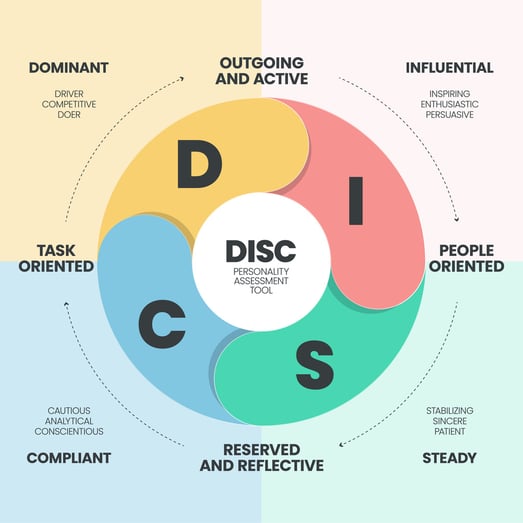
The DISC model is a widely recognized personality assessment tool that categorizes individuals into four primary personality types: Dominance (D), Influence (I), Steadiness (S), and Conscientiousness (C). By understanding these personality types and how they interact, you can unlock the full potential of your team and foster a more productive and harmonious working environment.
Understanding the Four DISC Personality Types
Dominance (D): These individuals are confident, assertive, and goal-oriented. They thrive in leadership roles and excel at problem-solving and decision-making.
Influence (I): Outgoing and enthusiastic, people with this personality type are skilled communicators and excel at building relationships and inspiring others.
Steadiness (S): Stable and reliable, those with a Steadiness personality value cooperation, loyalty, and a supportive team environment.
Conscientiousness (C): Analytical and detail-oriented, these individuals prioritize accuracy, quality, and adherence to rules and procedures.
Identifying and Leveraging Team Member Strengths
By recognizing each team member's DISC profile, you can gain valuable insights into their unique strengths, communication preferences, and work styles. This knowledge allows you to assign tasks and responsibilities that align with their natural inclinations, maximizing their potential and increasing overall team productivity.
Creating a Balanced and Cohesive Team
While diversity in personality types can sometimes lead to conflicts or misunderstandings, it can also be a powerful asset when managed effectively. A balanced team with a mix of DiSC profiles combines complementary skills, perspectives, and approaches, fostering innovation and enabling your team to tackle challenges from multiple angles.
Effective Delegation and Task Assignment
Understanding DiSC profiles can help you delegate tasks more effectively. For example, you might assign a project that requires decisive action and quick decision-making to a team member with a strong Dominant personality. Conversely, a detailed analysis task might be better suited for someone with a Conscientiousness profile, increasing team accountability.
Improving Collaboration and Communication
Effective communication is the cornerstone of successful teamwork. By recognizing each team member's communication style and preferences based on their DISC profile, you can adapt your approach to ensure clear understanding and minimize misinterpretations. This can lead to improved collaboration, reduced conflicts, and a more cohesive team dynamic.
Implementing DISC profiles in your team management strategy can unlock many benefits. By understanding and leveraging the diverse strengths of your team members, you can foster an environment where individuals thrive, collaboration flourishes, and collective goals are achieved more efficiently.
Embrace the power of DISC profiles and unlock your team's true potential. With this valuable tool in your arsenal, you can create a high-performing, engaged, and productive team capable of tackling any challenge that comes your way. Take the first step and see how to work together to create a high-performing team.
Ted Skinner has helped hundreds of companies achieve their dreams and goals by executing the Rhythm System, which helps align strategy, teams, and goals.

Ted Skinner
Ted Skinner is VP of Marketing at Fullintel and a former Strategy Consultant at Rhythm Systems. He brings deep expertise in data-driven marketing, AI, and strategic growth.
 Connect with me on LinkedIn.