

 All Articles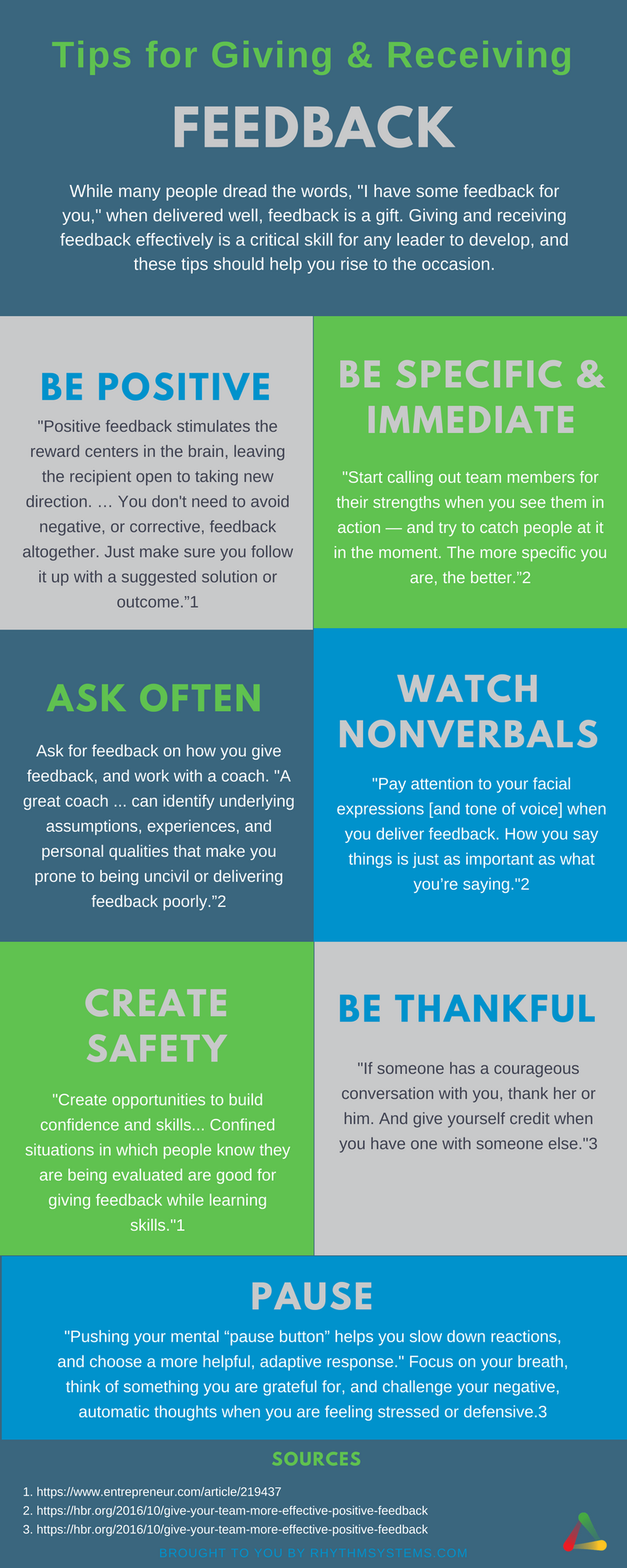
When I was in college, one of my professors pulled me aside after class and said, “You have great ideas, but when you present them to the class, you start out with an apology. Don’t do that - it makes us not want to listen, and what you have to say is worth hearing.” It was important feedback, and he delivered it in a way that made me receptive to it. I worked hard after that to watch what I said when I presented in class. Rather than being timid and apologetic with my contributions, I strove to be confident and direct. This one interaction made a big difference in my overall effectiveness as a communicator, and it has helped me in every class and job I’ve had since. I also remember a time when a coworker teased me in front of a group of other coworkers, saying, “You know, you really shouldn’t wear those old shoes anymore.” Her intentions may have been good (my tattered old sandals probably weren’t the most professional attire), but the way she chose to deliver the feedback put me immediately on the defensive.
Effectively giving and receiving feedback is one of the most important skills a leader must have to be successful. When delivered well, feedback can be an invaluable gift to help your team members improve, increase employee engagement and help your company succeed. However, it can be a real challenge to do this without triggering defensiveness, anxiety or disengagement. Additionally, according to an article in Forbes, "Leaders who ask for feedback are substantially more effective than leaders who don’t.” Receiving feedback well can also be a challenge when your own defensiveness and insecurities surface, but when we shut down rather than being open to feedback, we miss the opportunity to learn and grow.
Here are some tips for giving and receiving feedback:
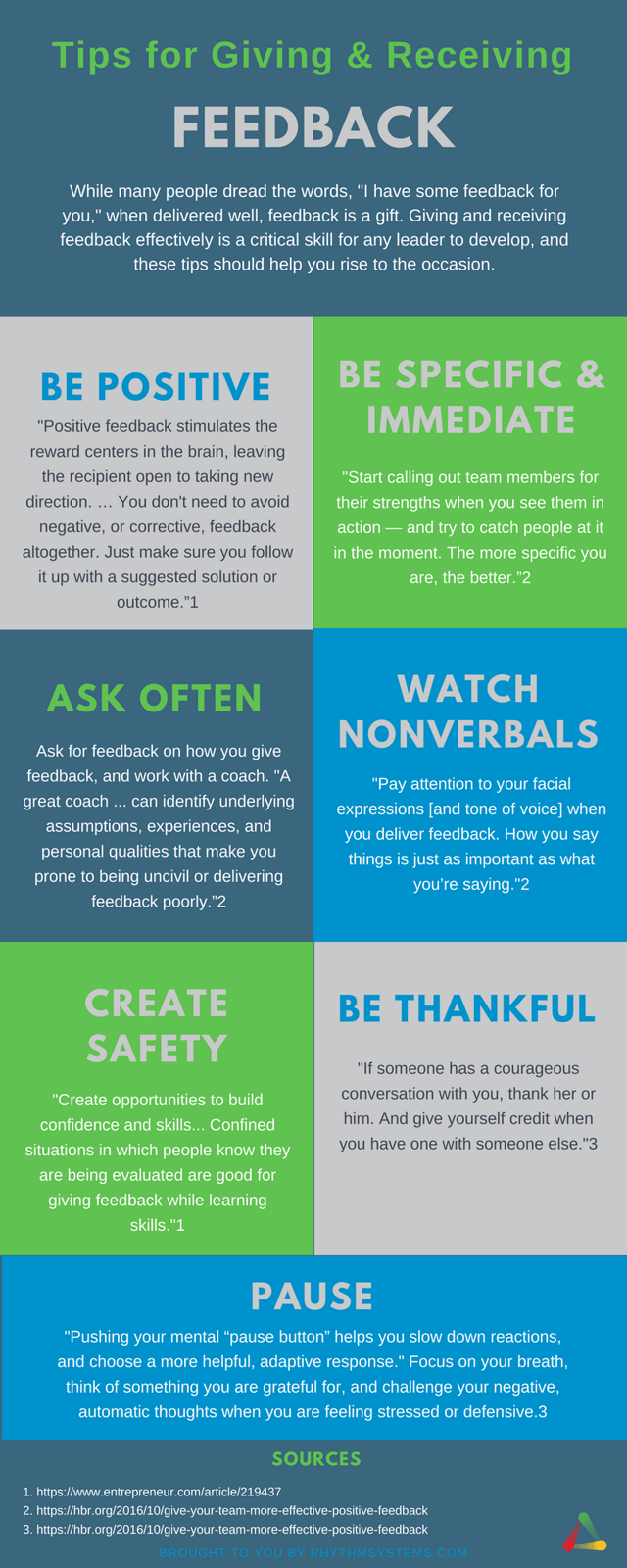
With awareness and practice, we can all improve our skills in giving and receiving feedback effectively so that we can help ourselves and our teams grow, learn and
-Jessica

Jessica Wishart
Jessica is Senior Product Manager at Rhythm Systems. She has experience in Client Services and Rhythm software technical support. Her background is in Organizational Execution.
 Connect with me on LinkedIn.