

 All Articles
What Does a Commitment Really Mean?
I was standing on stage in front of hundreds of leaders at the Ingram Micro Summit this past June when I asked a question that seemed simple enough:
“When you make a commitment to your team, what does that actually mean to you?"
The room got quiet.
It was the kind of silence that happens when a question forces you to stop and think about something you've never really examined before.
I let the moment sit.
Over the last two decades of coaching CEOs and leadership teams, I've learned that most people have never been asked that question. We talk about commitments all the time. We make them. We expect them from others, but very few leaders have stopped to define what a commitment actually means.
And in that moment, the silence told me everything.
Why Accountability is the Most Misunderstood Word in Business
Accountability is not about calling people out; it is about calling people forward.
When I ask leaders what accountability means to them, I usually hear some version of the same answer: consequences, follow-up, performance reviews, tough conversations. The energy behind the word is almost always slightly negative. Like accountability is a punishment waiting to happen, a hammer you hold over someone's head to make sure they do their job.
No wonder people dread it.
But I want to challenge that because when accountability is functioning the way it should function, it feels like a commitment made between two people who genuinely care about the outcome, and about each other.
Deciding is Not The Same as Committing
Here's a distinction I shared with the attendees at the Ingram Micro summit that I want to share with all of you.
There's a meaningful difference between making a decision and making a commitment.
A decision is cognitive; it happens in your head. You weigh the options, you choose a path, and then you move on.
A commitment is different. A commitment lives in your character. It's a promise you make to other people, and to yourself, that you will do what you said you would do, even when it becomes inconvenient or when the circumstances change, and it becomes hard.
The moment things get hard is exactly the moment most leaders quietly stop being accountable. They tell themselves a story, “the market shifted," “the team wasn't ready," “we needed to pivot", and they slide past the commitment without ever acknowledging they slid past it.
I've been guilty of this myself. I've made those same rationalizations, and every time, it cost me more than I thought it would, in trust, in momentum, and in the integrity of my own leadership.
What a Culture of Commitment Actually Looks Like
When I work with leadership teams, I use a framework I call the 5 C's of Accountability, and the one that anchors all the others is Commitment because without it, the rest of the C's collapse.
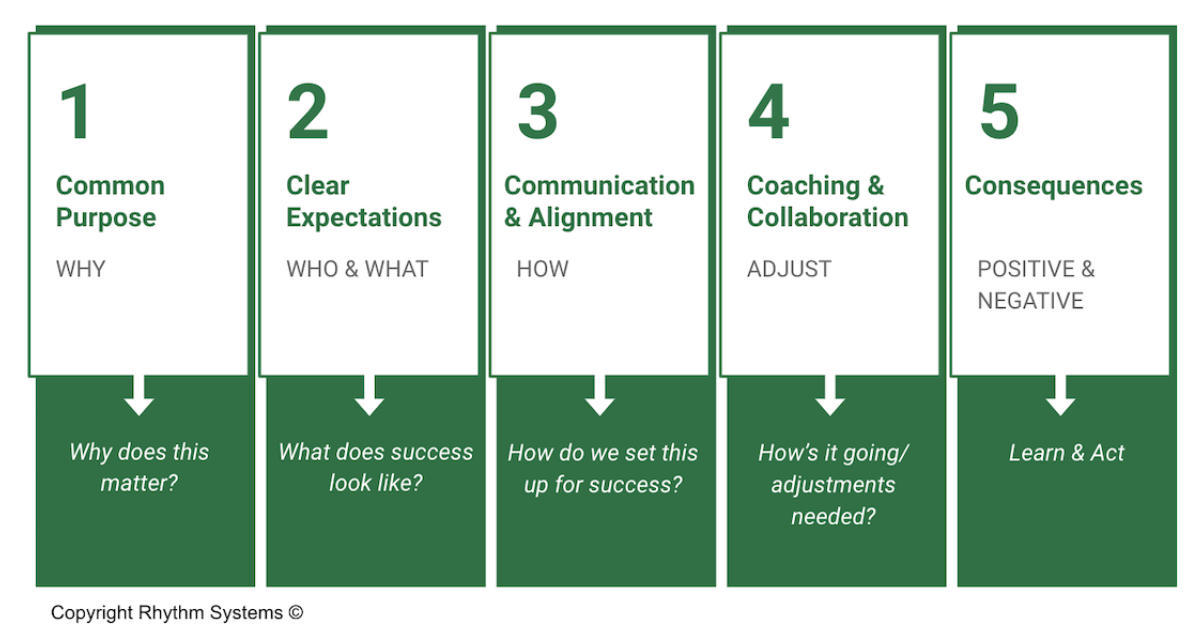
You can have a common purpose, clear expectations, and consistent communication rhythms. You can create scorecards, set expectations, and define consequences, but if people aren't genuinely making and keeping commitments to one another, you've built a system for accountability, not a culture of accountability.
So how do you know if commitment is real in your organization?
Ask yourself this: when someone on your team misses a commitment, what happens? Not in terms of consequences, but in terms of the conversation. Do people come forward proactively? Do they give early warning when they see the red signs? Do they say, “I'm not going to hit this, here's why, and here's what I'm doing about it"?
Or do they wait until the deadline has passed, hoping no one will notice?
The answer to that question tells you more about your culture than any engagement survey ever will.
At the Ingram Micro Summit, I saw something I genuinely don't see in every room I walk into: leaders who were leaning into this conversation, not defensively or reluctantly. With real curiosity and real courage. They wanted to build something better, and that desire and genuine hunger to raise their own standard is where transformation begins.
Accountability Starts With the Leader
One of the lessons I've learned over the years is that accountability doesn't start with the team; it starts at the top with the leader.
Most leaders agree with that statement in principle. The harder question is whether we're living it consistently.
Take a moment and think about the commitments you've made recently to your team, to your customers, to yourself, and to your family.
Which ones did you keep?
Which ones slipped?
I'm not asking that to create guilt. I'm asking because every strong accountability culture I've seen started with leaders willing to look in the mirror first.
Culture isn't built by what leaders expect. It's built by what leaders model.
When a leader openly says, “I committed to this, I missed it, and here's what I'm going to do differently," something powerful happens. The conversation shifts from blame to ownership. People stop hiding mistakes and start solving problems. Trust begins to grow.
That's why accountability isn't about pressure, it's not about micromanagement, and it's certainly not about catching people doing something wrong.
At its core, accountability is about trust. Trust that when we make a commitment, we mean it. Trust that if we get off track, we'll own it, and trust that we're all working together to achieve something bigger than ourselves.
Leaders set that standard, not by demanding it from others, but by demonstrating it first.
Accountability is a Choice
The leaders at Ingram Micro didn't leave that session with all the answers.
What they left with was something more important: a clearer understanding of what accountability actually means because accountability doesn't begin with consequences. It begins with commitments.
When leadership teams establish a shared definition of commitment and model it consistently, trust starts to grow, conversations become more honest, and problems surface faster. Teams spend less time explaining why things didn't happen and more time figuring out how to move forward.
That's when execution starts to improve.
If you're struggling with accountability in your organization, don't start by asking how to hold people more accountable.
Start by asking: Do we have a shared understanding of what a commitment means?
The answer to that question will tell you a lot about the culture you've built and the culture you're capable of building.
Accountability is the Foundation of Execution
If this article challenged your thinking, don't let it stop here.
Take this question back to your leadership team:
What does a commitment mean in our organization?
Accountability isn't built through consequences; it's built through trust, and trust is built when people consistently do what they say they're going to do.
The teams that execute well aren't necessarily smarter or more talented than everyone else. They've simply created a culture where commitments matter.
At @Rhythm Systems, we've spent more than 20 years helping leadership teams create clarity, alignment, and accountability around what matters most. Through proven planning frameworks, execution rhythms, coaching, and software, we help leaders turn strategic priorities into meaningful commitments and meaningful commitments into results.
If you're ready to strengthen accountability and execution on your leadership team, download our free One-Page Strategic Plan and discover the framework thousands of growth-minded leaders use to stay focused, aligned, and accountable.
Because strategy doesn't fail from a lack of ideas. It fails when commitments don't turn into action.

Patrick Thean
Patrick is an award-winning serial entrepreneur, a WSJ and USA Today bestselling author, CEO Coach, and Co-founder of Rhythm Systems.
 Connect with me on LinkedIn.