

 All Articles
At the start of a new year - or any time leaders step back to reset priorities - goal-setting moves front and center for many organizations. The strength of any plan is directly tied to the quality of the goals behind it. High-quality goals increase the likelihood of hitting (and exceeding) strategic targets. Yet writing those high-quality goals is more challenging than most leaders expect.
The gold standard for effective goal-writing is the SMART framework: specific, measurable, attainable, relevant, and time-bound. A well-written goal should define what success looks like, clarify accountability and ownership, set aligned time expectations, and establish how progress will be tracked and communicated. When a strategic plan contains dozens of goals across teams, functions, and time horizons, the work required to craft all of them well can feel overwhelming.
This is precisely where Rhythm Intelligence - AI for strategy execution provides leverage. Rhythm’s SMART Goal Writer dramatically simplifies the process of turning vague intentions into execution-ready SMART goals. Instead of manually constructing each element, you simply describe the goal in plain language—and Rhythm’s SMART Goal Writer does the heavy lifting.
How to Use AI for Goal Setting in 3 Easy Steps
Consider a real example from a planning meeting. Someone suggests, “Grow the team.” The room is energized, everyone agrees it's important, and the idea quickly gets captured as a goal. But that vague phrase leaves anyone not present in the meeting with more questions than answers. Grow the team… how? Hire new people? For which roles? Improve development pathways? Increase productivity?
This is exactly the kind of ambiguity that leads to misalignment, delays, and rework.
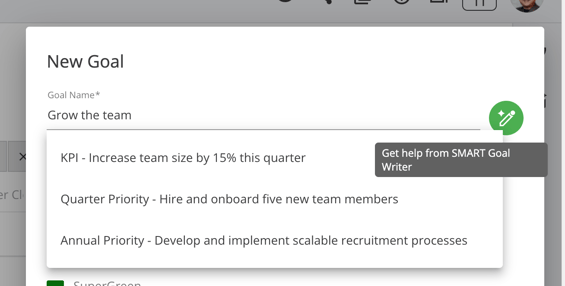
With the SMART Goal Writer, you can simply type “Grow the team” into Rhythm and generate a concrete, actionable suggestion with one click.
Step 1: Choose the Goal Type
The SMART Goal Writer first helps you anchor the goal to the appropriate time frame. Is this an ongoing KPI, a quarterly priority, or an annual initiative?
In our example, selecting a quarterly priority immediately sets a start and end date aligned with your company’s quarter—automatically fulfilling the time-bound requirement.
If the initial suggestion isn’t perfect, it still gives you a clear understanding of the level of specificity required. It also provides a starting point for team discussions: Is the focus hiring? Achieving full productivity? Completing onboarding? If the suggestions feel off base, that’s an indicator that the original goal description needs to be more specific.

Step 2: Define Success
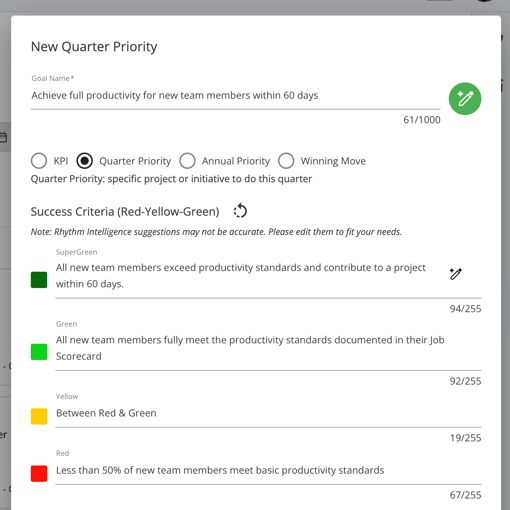
Once the action is clear, the next step is defining the successful outcome. Sometimes this is straightforward—for instance, “Hire five new team members by quarter end.” In that case, the SMART Goal Writer can quickly generate Green, Red, and SuperGreen criteria:
-
Green: 5 successful hires completed
-
Red: Only 2 hires onboarded (unacceptable)
-
SuperGreen: 5 hires onboarded with positive feedback from managers

Step 3: Clarify Ownership and Alignment
In Rhythm, each goal has one clear owner, ensuring accountability, focus, and visibility. You can also link every goal to the strategy it supports, creating a direct line of sight from daily execution to long-term strategic outcomes.

The Result: Goals That Drive Strategic Success
The SMART Goal Writer ensures that every goal across your organization is:
- Meaningful
- Execution-ready
- Measurable
- Time-specific
- Clearly owned and aligned


Rhythm Systems
 Connect with me on LinkedIn.