
backAll Articles

Published February 01, 2021 at 12:00 AM

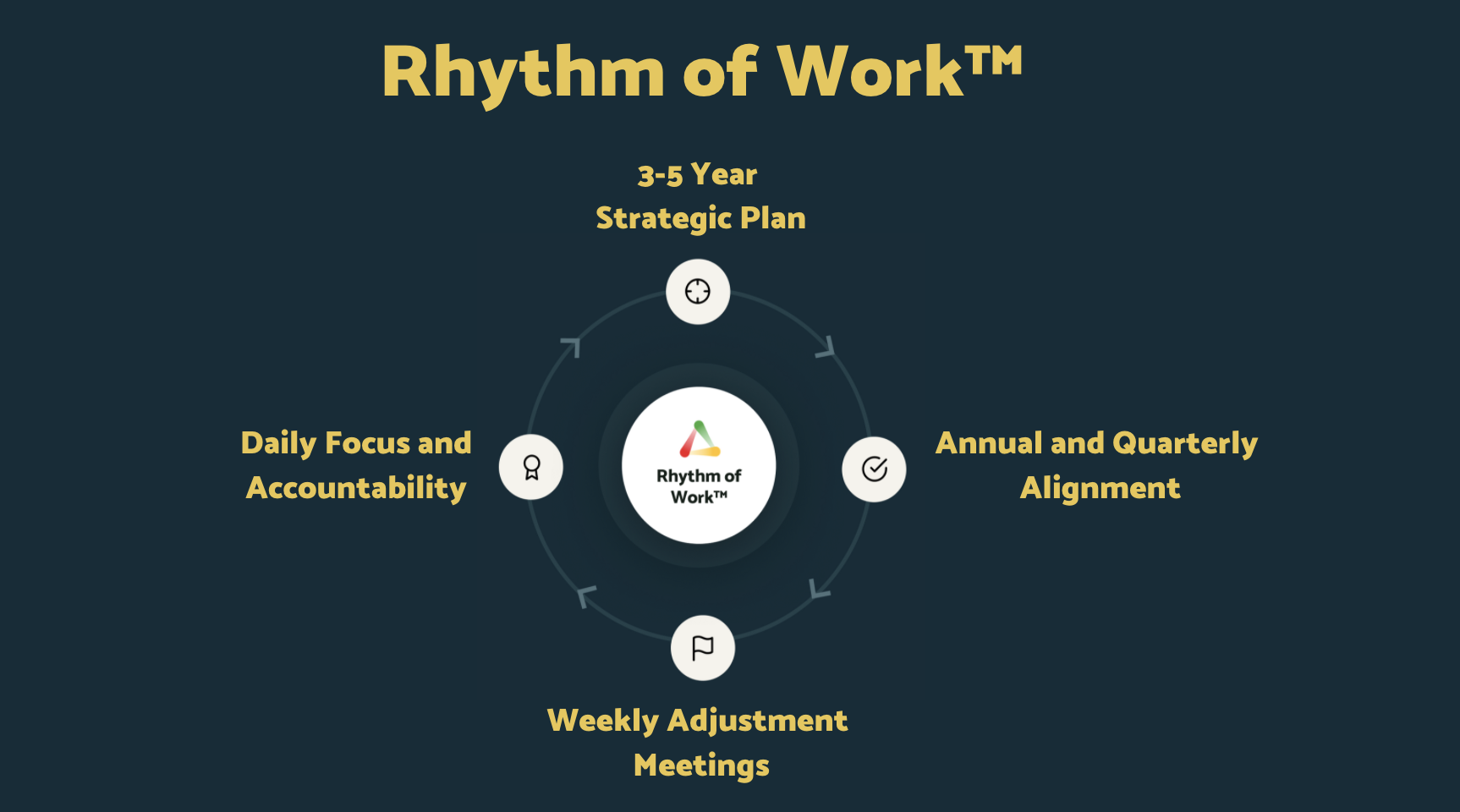
Rhythm of Work™ – The Rhythm Systems Strategic Execution Framework

3 min read
3 min read

Key Takeaways

  • As companies grow, complexity grows with them, fragmentation and silos become prevalent, and employees tend to work on departmental agendas rather than the overall company agenda.
  • Without focus or a common purpose, everyone stays busy but produces little value, with too many priorities driven by too many bosses.
  • Time-consuming, low-value work includes rehashing problems that are already understood in meetings, gathering evidence to show who is at fault, documenting the flaws of others, and building allies to consolidate power.
  • Even with more resources and expertise than ever before, mid-market companies commonly execute poorly on strategic initiatives like integrating acquisitions, entering new markets, launching new products, and scaling operations.
  • High-Performance Teams follow a specific rhythm of work, with intentional times to stop, review what is and is not working, and make adjustments, which is critical for high-growth firms to get the right things done at the right time and in the right sequence.

The strategic execution framework

As companies grow, complexities tend to grow as well, making executing growth initiatives on time challenging. Fragmentation and silos become prevalent as the Rule of 150 comes into play due to growth. Employees tend to work on departmental agendas rather than the overall company agenda. Everyone is busy, but they produce little value. There is no real focus or common purpose—too many priorities driven by too many bosses. Examples of work that consumes a great deal of time and returns little value include: wasting valuable meeting time by rehashing problems that are already understood, gathering evidence to show who is at fault for something that went wrong, documenting the flaws or omissions of others, or spending a significant amount of time building allies to consolidate power.

At a time when they have more resources and expertise than ever before, mid-market companies commonly execute poorly on their strategic initiatives such as integrating acquisitions, entering new markets, launching new products, and scaling operations.

By contrast, High-Performance Teams have a very specific rhythm of work—intentional times to stop, review what is working and what is not, and make necessary adjustments. For high-growth firms running at a rapid pace, these rhythms are critical to getting the right things done at the right time and in the right sequence.

To read more, download the complete white paper below. 

Download Your Rhythm of Work White Paper


Frequently Asked Questions

What is a rhythm of work?

A rhythm of work is a specific cadence of intentional times to stop, review what is working and what is not, and make necessary adjustments. High-Performance Teams follow this rhythm deliberately. For high-growth firms running at a rapid pace, these rhythms are critical to getting the right things done at the right time and in the right sequence.

Why do growing companies struggle to execute their strategies?

As companies grow, complexity grows too, making it challenging to execute growth initiatives on time. Fragmentation and silos become prevalent, and employees tend to work on departmental agendas rather than the overall company agenda. The result is that everyone is busy but produces little value, with too many priorities driven by too many bosses.

What kinds of work waste time without creating value?

Common examples include wasting meeting time rehashing problems that are already understood, gathering evidence to show who is at fault for something that went wrong, documenting the flaws or omissions of others, and spending significant time building allies to consolidate power. All of these consume a great deal of time and return little value to the company.

Which strategic initiatives do mid-market companies commonly execute poorly?

Integrating acquisitions, entering new markets, launching new products, and scaling operations. This happens even at a time when mid-market companies have more resources and expertise than ever before, which is why a deliberate rhythm of work matters.

Picture of Cindy Praeger

Cindy Praeger
Cindy is a Serial Entrepreneur who has a passion for helping companies scale. She is the Co-Founder of Rhythm Systems, and loves helping growing organizations make breakthroughs to achieve their dreams and goals.
LinkedIn Connect with me on LinkedIn.