

 All Articles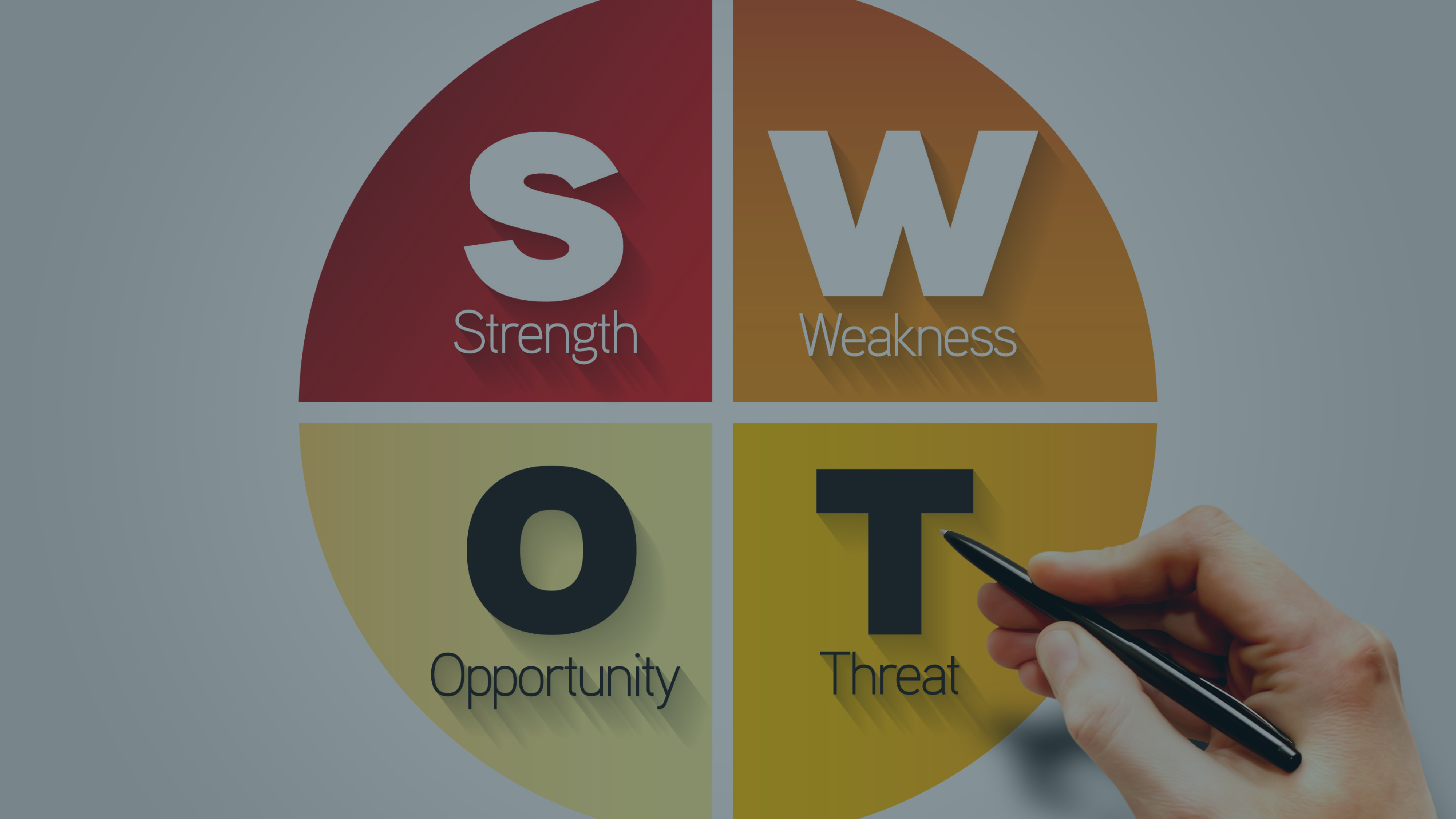
Many planning tools are used on an annual basis—yet they are often overlooked in the middle of a pandemic like COVID-19. Now more than ever, there is an opportunity in your team's need for direction, a way to focus their action, and a bumper rail to keep them moving forward. This will allow you to harness your team's energy rather than sinking into the quicksand of panic.
Many executives have heard of SWOT but aren’t familiar with how to leverage it for their business plan, much less how to utilize it in a crisis. Every business I work with has seen the effects of the pandemic—either positive or negative. Let’s look at utilizing the SWOT approach for either impact by making it a cSWOT (Crisis SWOT). A SWOT analysis about covid 19 is crucial in establishing a healthy decision-making capability and communication rhythm in your company during trying times.
In the absence of information, your team will make it up. With all your favorite stations, news, Twitter, Facebook, etc., focused on COVID-19, conflicting information seems to spread faster than a contagious virus. To SWOT away at a pandemic, you must own the communication in your company. These days, this communication often comes through Zoom virtual meetings. Keep them fresh with a list of Zoom Icebreakers to keep your meetings engaging.
A crisis SWOT diverges from the usual SWOT output and is foundational for controlling communication in your company (even overwriting conflicting stories and news) and can be completed in four steps.

Step 1: Understand SWOT analysis terms
SWOT is a tool that identifies the Strengths, Weaknesses, Opportunities, and Threats of an organization. A SWOT visual is a 2x2 matrix, yet can be much more when used as a tool to leverage the thinking and energy of more than one person for collaboration, which is one reason we built it directly into the dashboard of Rhythm software.
Put aside the standard, long-term use of this tool and focus on this time of rapidly changing pandemic. For a COVID SWOT, the outcome desired is to categorize the immediate positive and negative influence of internal and external forces, thus creating a SWOT matrix of four categories based on internal forces and external forces:
INTERNAL FORCES (we have control)
- Strengths Category (positive: capitalize on, leverage, or protect)
- Something that we can do very well today that could help us gain fast traction with skills, resources, and knowledge already in place.
- Weakness Category (negative: mitigate or eliminate)
- Areas holding us back should be removed or improved with the right energy and effort.
EXTERNAL FORCES (we do not have control)
- Opportunities Category (positive: potential areas to invest in or pursue)
- These could include technology, relaxing regulations, eliminating trade barriers, changing consumer preferences, etc.
- Threats Category (negative: to shore up against, mitigate)
- The emergence of new regulations, increased trade barriers, supply chain disruption, etc.
As a crisis management tool, the COVID-19 SWOT analysis applies equally to companies who have activated BCP (Business Continuity Plans) and those who have no plan and are scrambling or stuck. A BCP is valid for a one-time (or unchanging) declared event, yet it often overlooks the changing environment of a pandemic. A SWOT analysis during a pandemic constantly changes with the changing market conditions and should be re-evaluated during your regular rhythm of work. A SWOT incorporates the changing environment of this unpredictable business enemy. If you have no plan, the SWOT lets you immediately focus your energy and communicate the right message to your team.
SWOT Analysis Video
Returning to the office or hybrid model? You should also read Use Core Values to Strategize Your Post-COVID Return to the Office.
Step 2: Apply the SWOT approach to BSC Categories
The development of SWOT at Stanford Research Institute included a questionnaire completed by over 5,000 executives—and there is a direct link between the conclusions and your company: The CEO should be the chief planner, and the executive or senior team should be the senior planning team.
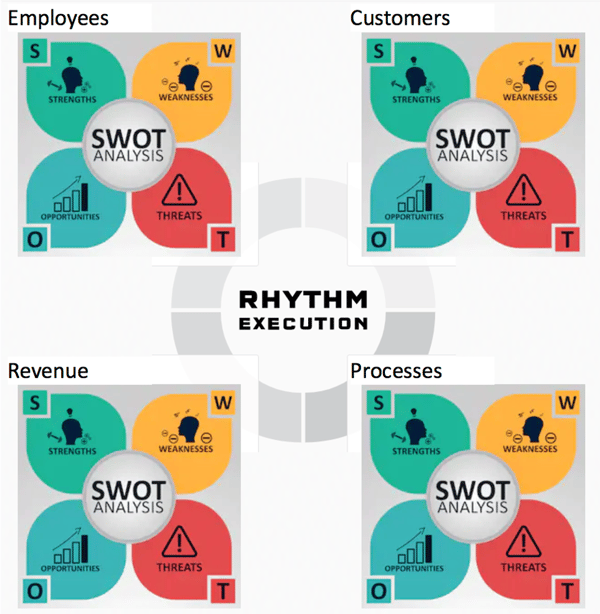
Meet weekly and discuss Strengths/Weaknesses/Opportunities/Threats, one category at a time: Employees, Customers, Revenue, and Processes (see graphic below). Prioritize each categorical list, and then compare all four to create your immediate 3-5 weekly priorities to focus on.
Step 3: Do your pandemic SWOT analysis a minimum 1x per week
Why do this every week? I admit that it seems counterintuitive. Yet standard approaches cannot lead us through these unpredictable times. Things are changing fast, and there is no precedent. By focusing on the top 3-5 weekly priorities from your COVID-19 SWOT analysis, your team will have a focus for the week while you and your leadership team own the communication—and all are less likely to be blindsided. This will build encouragement during this pandemic and help build morale.
Each week, after you complete Step 2, reconvene again. Use the latest info and intel, work through a SWOT, and create a new list of 3-5 priorities for the next week. Don’t forget that with each weekly plan put in place, you must own the communication with stakeholders (team, lenders, board, public, government agencies, suppliers, etc., as appropriate).
Step 4: Communicate the following steps to the appropriate stakeholders
Set a weekly (minimum) communication cycle to inform all stakeholders. In uncertain times, it’s easier to communicate consistently by scheduling ahead. Think about your stakeholders' “news cycle” and plan accordingly. You may use a morning internal press announcement to set the level of what the company and leadership are doing against last night's (or this morning’s) news.
To SWOT during a pandemic, maximize team member effort and communicate your SWOT. You’ll give your team direction, focus their actions, and put up bumper rails to keep them moving forward—all while gaining actionable data to lead you through any pandemic. Understand the SWOT terms, apply the SWOT approach weekly (or more often), and immediately communicate the following steps to appropriate stakeholders.
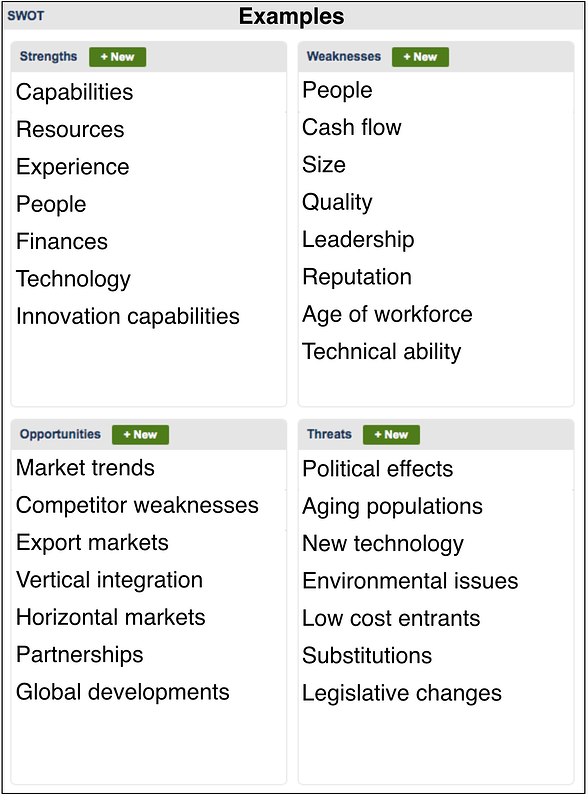
Here is a COVID-19 SWOT analysis example done in the Rhythm Systems strategic planning software:
Be sure to write with your application, results, and questions, or check out our virtual planning services if you need expert help – Barry.
Need help aligning your team to achieve your growth goals? Rhythm Systems software was ranked the #1 easiest software to use, with the highest ROI, fastest implementation, and highest adoption rate on G2.

Barry Pruitt
Barry is a Rhythm Consultant. He has years of experience helping clients get in a strong Think Plan Do Rhythm to grow their business with purpose. He is also a professional speaker and expert meeting facilitator.
 Connect with me on LinkedIn.