

Strategy Execution for Mid-Market Companies: Why Execution Fails (and How to Fix It)
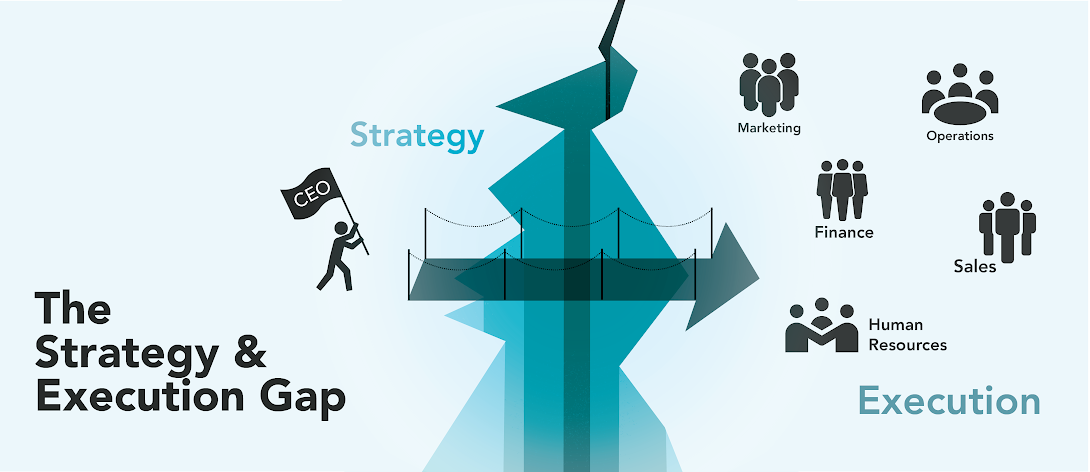
Strategy execution is the operating system mid-market companies use to turn an Annual Plan into focused weekly results, and it's where most of them break.
The strategy is rarely the problem. The Execution Rhythm to deliver it is.
This guide covers why strategy execution fails at mid-market scale, the seven patterns we see most often, and the Think-Plan-Do system for closing the gap - with the templates and tools you can put to work this quarter.
What are the 7 most common reasons mid-market companies fail at strategy execution?
After two decades coaching mid-market leadership teams, the failure patterns are predictable.
1. Why does my strategic plan feel too complex — or too vague?
Plans swing between a 50-page strategy nobody can remember and a one-line aspiration with no real tradeoffs.
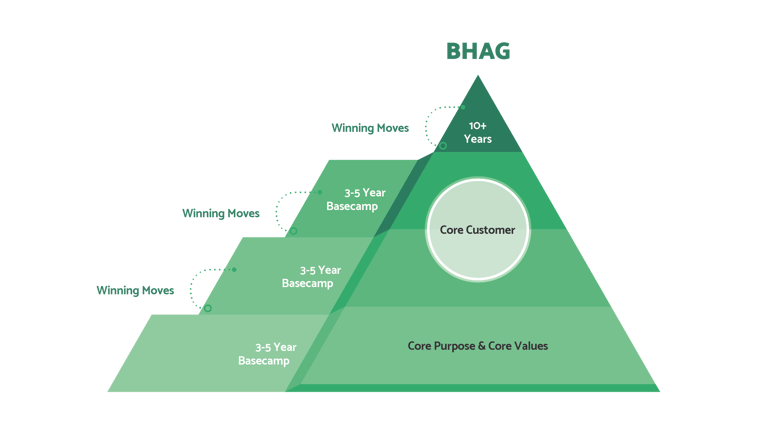
Fix: Put your strategy on one page. Name 3–5 Winning Moves for the next 3–5 years and connect them directly to your Annual Plan and Quarterly Plan. (Methodology explained. Think-Plan-Do for growth.)
2. Why don't my teams agree on what "success" actually means?
Goals written as broad categories ("launch new product") create different definitions of "done" — and silent disappointment.
Fix: Define every priority and KPI with SMART goals and Red-Yellow-Green criteria so "on track" means the same thing to everyone in the room.
3. Why does our quarterly plan have too many priorities?
Mid-market leadership teams overcommit. The result: long lists, constant context-switching, and important initiatives that never finish.
Fix: Right-size the plan to actual capacity. Limit each team to a few critical Quarterly priorities. (13-week quarterly planning. Best practices for quarterly planning. 20 ways to achieve your annual plan.)
4. Why does alignment break down once we leave the planning offsite?
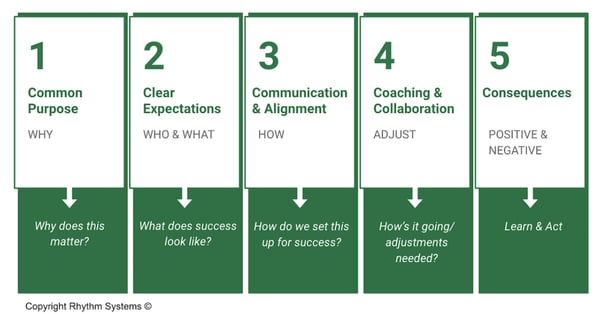
Executives leave planning aligned. That alignment usually stops at the boardroom door. Down the org, people don't know how their work connects to company goals, what to prioritize this quarter, or what to stop doing.
Fix: Cascade the plan with consistent vocabulary and tools so company, department, team, and individual priorities visibly connect. (Aligning employees with company goals.)
5. Why is accountability so hard to enforce in our company?
Most leaders confuse accountability with punishment, so commitments slip quietly, "invisible work" has no owner, and meetings report status instead of driving decisions.
Fix: Use the 5 Cs of accountability — clear owners, visible Red-Yellow-Green dashboards, and conversations focused on solving problems, not assigning blame. (Team Accountability Assessment.)
6. What's the difference between an annual offsite and a real operating rhythm?
An annual offsite plus ad-hoc status meetings is not an operating system. Without rhythm, execution becomes reactive, personality-driven, and dependent on heroics.
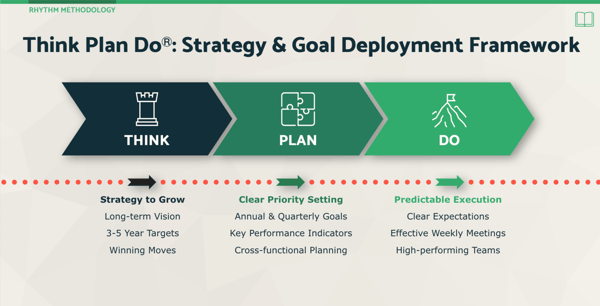
Fix: Install the Think-Plan-Do Execution Rhythm — time to think, structured Annual and Quarterly Plans, and a Weekly Adjustment Meeting (WAM) that drives decisions, not status updates. (Strategic weekly meetings.)
7. Why are we always blindsided by missed quarters?
Most companies track lagging indicators only — revenue, profit, EBITDA. By the time those move, the quarter is gone.
Fix: Identify a small set of leading KPIs that predict success and review them weekly as an early warning system. (Leading Indicators Creator. 179 KPIs for business growth. KPI Guide.)
What does a real strategy execution system look like?
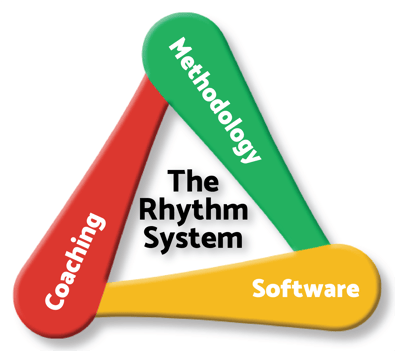
Fixing strategy execution requires a system that connects how you Think, Plan, and Do every week. The Rhythm Systems approach combines three things:
Think-Plan-Do methodology clarifies long-term direction and Winning Moves, breaks strategy into Annual and Quarterly Plans, and creates the weekly habits that keep teams aligned and accountable. (Harnessing Think-Plan-Do for growth.)
Rhythm Software centralizes strategy, plans, KPIs, and priorities; provides real-time Red-Yellow-Green dashboards; and surfaces what needs attention each week so you can adjust quickly. (Rhythm Software features. Ask Patrick AI strategy assistant. AI-powered business planning.)
Expert coaching runs better Annual and Quarterly Planning sessions, designs a realistic 13-week race, and builds the leadership habits behind a culture of execution. (Building a leadership dream team. Hiring a strategic planning facilitator.)
How do you turn strategic planning into predictable results?
Mid-market companies fail when they can't reliably turn ideas into focused weekly execution.
Simplify your strategy onto one page. Name your Winning Moves. Right-size your Quarterly Plan. Run a real Weekly Adjustment Meeting. Use leading KPIs as an early warning system.
Do that consistently and you'll hit growth goals more predictably, reduce drama and rework, retain top talent, and free leadership to think strategically instead of firefighting.
That's exactly what Rhythm Systems was built to help you do.
Talk to a Rhythm expert for a personalized walkthrough of how Think-Plan-Do, Rhythm Software, and our coaching team can close your execution gap this quarter — or download the 3-5 Year Strategic Planning Template to start today.
